
Know Your MP/MLA

Bansuri Swaraj
Bharatiya Janata PartyCandidate Documents
Criminal Status: No
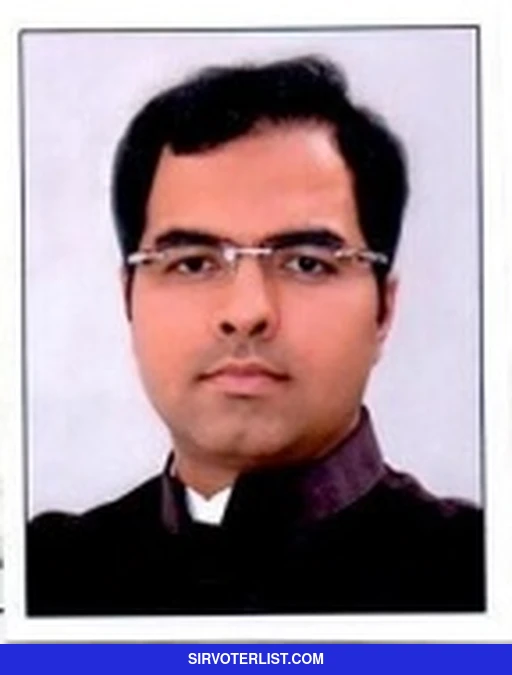
Parvesh Sahib Singh
Bharatiya Janata PartyCandidate Documents
Criminal Status: Yes
Select Electoral Roll Type
Select Parts (Polling Station) in New Delhi
Search and select up to 10 parts, then select electoral roll and language above to download the latest electoral roll.
Latest Updates in New Delhi
Protests Erupt in Delhi and Mumbai Over Election Commission Voter Roll Row
Protests broke out across New Delhi and Mumbai on Friday. The Gen Z-led Cockroach Janta Party (CJP), student groups and opposition parties all called for Chief Election Commissioner Gyanesh Kumar to step down over a voter roll issue.
Hundreds of police and paramilitary staff surrounded a barricaded protest area in central New Delhi. They bundled demonstrators into buses as they arrived. Delhi Police put Section 163 in place, which bans gatherings of more than five people, slogans and speeches. At least 11 metro stations near Jantar Mantar were shut down.
Reports say more than 500 people were arrested in New Delhi. Among them were former Delhi Chief Minister Atishi Marlena, Aam Aadmi Party members and student organisation members.
In Mumbai, a crowd slowly built up at Shivaji Park with heavy police presence around the area.
Why the protests started
CJP called these protests after reports surfaced that Chief Election Commissioner Gyanesh Kumar's two deputies had raised concerns at least 14 times in the past 10 months. They flagged problems with voter list revisions, registration procedures and digital systems. Critics say a nationwide voter-verification drive led to millions of eligible voters being removed from electoral rolls, which helped the ruling BJP. The commission has denied these claims, saying the changes removed duplicate, deceased or ineligible voters.
CJP convener Saurav Das said the movement will not stop until Kumar resigns. The party plans to expand protests across the country in the coming days. Opposition protests led by Indian National Congress are also set to demand Kumar's resignation starting Tuesday.
BRS Leaders Question Election Commission Independence Amid Protests Across India
BRS leaders raise serious questions over how the Election Commission works and whether it's truly independent. V Srinivas Goud asked for clear answers on the poll panel's decisions, saying public doubts need to be addressed soon. "The Commission works under the government, not independently, even though they claim otherwise," he said.
BRS leader Jeevan Reddy went further with charges of voter deletions. He claimed voters who oppose BJP are being removed from electoral rolls in multiple states. He also warned about Aadhaar duplicates. One person, one vote, he stressed. That matters for every Indian voter.
Protests broke out on multiple fronts. CJP activists and civil society groups held a demonstration at Mumbai's Shivaji Park against alleged problems in the Special Intensive Revision exercise. Heavy police were deployed at the venue.
Protests spread across cities
In Delhi, SFI and DYFI members staged protests near Jantar Mantar. CPI(M) leaders openly demanded removal of Chief Election Commissioner Gyanesh Kumar. Delhi Police denied permission and imposed Section 163 of the BNSS, which bars gatherings of five or more people. Central Delhi saw tighter security, and Delhi Metro closed entry and exit at 11 stations including Janpath, Rajiv Chowk, Central Secretariat and New Delhi.
Opposition parties are not backing down. The INDIA bloc has planned more protests on October 6 and a rally in Delhi on November 1. The political heat around poll panel reforms is far from over.
AAP's Saurabh Bharadwaj detained at Jantar Mantar protest
New Delhi: AAP Delhi unit president Saurabh Bharadwaj was detained on Friday. He was with several party workers while they protested against the Election Commission at Jantar Mantar.
Delhi Police denied permission for the gathering. They imposed Section 163 restrictions across New Delhi district, saying it was needed for public safety, order and smooth traffic. Unauthorised gatherings, public speeches, slogan shouting, processions and dharnas are banned under this order. Violations may lead to legal action.
What triggered the protest
Bharadwaj took a sharp dig at the heavy security. He said the whole city had been turned into a fortress. He told reporters he reached the spot by spending Rs 11 on the Metro and Rs 80 on an auto-rickshaw, then urged party workers to come out too. That Rs 91 line was a smart way to make a point.
The protest is over alleged irregularities in the Special Intensive Revision of electoral rolls. Protesters also want Chief Election Commissioner Gyanesh Kumar to resign. Student bodies AISA and SFI, along with the Congress, RJD and AAP, are expected to join in.
Opposition parties will also run a Save Democracy campaign. They plan district level marches and gatherings, with a bigger rally outside the Election Commission office on October 6. The Commission has said the electoral roll revision is being done as per established procedure.
Congress Plans Nationwide Protests Against Election Commission Over Electoral Roll Issues
Congress is getting ready for a big face-off with Election Commission of India. The party has called a meeting of all AICC in-charges and PCC chiefs in New Delhi on October 5. The goal is to plan protests over alleged problems in electoral rolls.
Along with INDIA bloc allies, Congress has announced a nationwide "Save Democracy March" at the district level. Here are the key dates:
- October 2 to 8: Save Democracy March across the country
- October 6: Opposition MPs will march to Election Commission
- Second week of October: INDIA bloc leaders plan to meet President Droupadi Murmu
The SIR controversy
The fight is mainly about the Special Intensive Revision (SIR) exercise. A report by The Indian Express said Election Commissioners Sukhbir Singh Sandhu and Vivek Joshi raised objections. They objected at least 14 times over 10 months, all about decisions related to the SIR process.
An extra declaration was added to online Form 6 on the ECINET portal. It asks if the applicant's name or that of their parent or grandparent showed up in the previous SIR electoral roll.
Rahul Gandhi made it clear that INDIA bloc leaders will hold people accountable. "Indian democracy is bigger than every single person in this country," he said.
Election Commission has denied all claims of wrongdoing. It says electoral rolls are prepared through established legal processes. It also says steps have been taken to review how ECINET works.

Rahul Gandhi Questions CEC Gyanesh Kumar's Legal Immunity Over SIR Row
Congress leader and Leader of Opposition in Lok Sabha, Rahul Gandhi, has raised serious questions about the legal protection enjoyed by Chief Election Commissioner Gyanesh Kumar. He did this in a post on X on Wednesday, amid the growing political fight over the Special Intensive Revision (SIR) of electoral rolls.
Gandhi asked why the CEC has what he called lifetime legal immunity. He linked this protection to an allegation that Prime Minister Narendra Modi uses the CEC to steal elections. Strong words, no doubt.
What is Section 16 of the 2023 Act?
Gandhi's remarks target Section 16 of the Chief Election Commissioner and Other Election Commissioners (Appointment, Conditions of Service and Term of Office) Act, 2023. Under this provision, courts cannot accept or continue civil or criminal cases against a serving or former CEC or Election Commissioner for any act done while carrying out official duties. This is not a protection created only for Gyanesh Kumar. The law also says the CEC can be removed only in the same way as a Supreme Court judge.
SIR Controversy Gets Bigger
The whole dispute is about the Election Commission's Special Intensive Revision of electoral rolls. Opposition parties have raised concerns about possible exclusion of eligible voters and the procedures being followed. Congress and other INDIA bloc parties have accused the Election Commission of failing to address their concerns properly.
Reports say Election Commissioners Sukhbir Singh Sandhu and Vivek Joshi raised objections at least 14 times over 10 months on decisions connected with SIR. The Election Commission, however, has rejected the idea that such differences show problems within the institution. It said differing views are a normal part of internal discussions and that final decisions on SIR were taken unanimously.
INDIA Bloc Plans Joint Action
Leaders of the INDIA bloc met in New Delhi on Wednesday to talk about a coordinated response. The alliance has demanded the removal of Gyanesh Kumar and wants pre-SIR electoral rolls to be used for future elections. They have also called for stronger support for voters excluded from rolls and safeguards against exclusion due to administrative or technical issues.
The BJP has pushed back hard. Union minister Shivraj Singh Chouhan accused the INDIA bloc of using the Election Commission controversy for political gain.
Supreme Court Will Look at the Matter
The Supreme Court is scheduled to consider a petition challenging parts of the Election Commission's functioning and the SIR process. The petition seeks suspension of the CEC and legal review of decisions taken during the electoral-roll revision.
Right now, two big questions remain. How should the SIR exercise be conducted? And what level of legal protection should Election Commissioners get for actions taken in their official role? Both matter a lot for every voter in the country.
ECINET, ERONET Explained: How Election Commission's Voter Roll Systems Work
Election Commission's digital systems ECINET and ERONET are under review. The question is straightforward: do these platforms give Electoral Registration Officers (EROs) enough room to make the decisions the law allows them to make?
An electoral roll is the official list of eligible voters in any constituency. Under the Representation of the People Act, 1950, the Electoral Registration Officer is responsible for preparing and revising it. That officer, usually a sub-divisional magistrate, processes applications, hears objections, and decides who stays on the voter list. The software does not decide. The ERO does.
ERONET was set up as a central system to handle voter registration, migration, and deletion applications. As per the ECI, it replaced 36 separate state systems and databases. Think of it as a decision support tool. It can flag possible duplicate entries, but the ERO looks at the records and takes the final call.
ECINET launched in January 2026 and brought together more than 40 applications and websites under one platform. Voters can register, search electoral rolls, track applications, download electronic voter IDs, and find polling station information all through it. The electoral-roll functions previously handled by ERONET now sit within ECINET as well.
What triggers a flag?
During the ongoing Special Intensive Revision (SIR) of electoral rolls, ECINET processes electoral data and flags what are called "logical discrepancies." These are mismatches when the system matches an elector against a parent or grandparent in older rolls. A relative's name mismatch, an unusual age gap, or inconsistent age progression can all trigger a flag. The ERO reviews such cases and decides the next step.
Why the controversy? Election Commissioners Sukhbir Singh Sandhu and Vivek Joshi raised concerns about the software limiting the discretion that law gives to EROs. Reports mentioned a "gradual centralisation" of the electoral roll database. The worry is real. If software limits what EROs can decide directly, it could chip away at the statutory authority they are supposed to hold.
Maharashtra Chief Electoral Officer S Chockalingam went further. He wrote to the ECI seeking four changes to ECINET. Among them was giving EROs the power to decide which cases involving logical discrepancies actually need a hearing. He also asked for more flexibility over acceptable documents.
Election Commission responded. EROs can now exempt people flagged for logical discrepancies from personal hearings if appropriate. Further flexibility for field officers will be made operational. A review committee, headed by a senior Deputy Election Commissioner with an independent expert from an IIT or IIIT, will also assess ECINET.
Source: Election Commission of India
